Deepfake Prevention: Best for Reliable AI Voice Systems 3
This article is about Prevention. "The voice on the other end of the line is no longer just a human; it is a digital reconstruction that can be indistinguishable from reality."
Securing reliability in AI voice calling requires a dual approach of advanced biometric authentication and rigorous operational protocols to prevent deepfake fraud. This guide explores how to establish trust through technical verification, data integrity, and human-in-the-loop oversight.
* Implementing multi-factor voiceprint verification to prevent identity theft. * Utilizing real-time latency analysis to detect synthetic speech anomalies. * Developing strict operational workflows for automated phone guidance. * Ensuring data privacy and encryption for all voice generation processes.
How can we distinguish a real person from a synthetic voice?
In the morning I hold deepfake and walk through the next step.

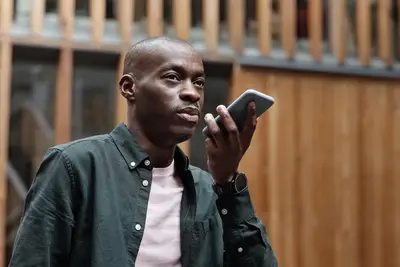
A smartphone vibrates on a wooden desk at 3:00 AM, and the voice responding to the caller sounds perfectly natural, yet lacks the subtle breathing patterns of a human. The primary challenge in securing AI voice calls is ensuring the authenticity of the speaker to prevent social engineering attacks.
According to a Massachusetts Institute of Technology research scientist, the 15.ai web application can offer real-time generations of synthetic speech using deep learning.
To achieve reliability, companies must move beyond simple sound recognition and implement deep-learning-based liveness detection. This technology analyzes micro-fluonomical patterns and spectral inconsistencies that are often present in synthetic speech but absent in human vocal cords.
By integrating these checks into the calling platform, businesses can verify that the person on the line is a living individual rather than a pre-recorded or generated clip.
The technical process for securing these calls involves several layers of verification.
- Capture high-fidelity audio samples during the initial handshake of the call. 2. Run real-time spectral analysis to check for "robotic" artifacts or unnatural frequency gaps. 3. Compare the live audio against a stored, encrypted voiceprint for biometric matching. 4. Trigger an immediate secondary authentication step if the voice signature deviates from the baseline.
I remember sitting in a quiet office during a pilot test, listening to a voice-cloned agent attempt to pass through our security gate; the subtle mismatch in the way the "voice" handled sudden silence was the only thing that gave it away.
- Analyze the natural micro-fluctuations in pitch and cadence.
- Identify the absence of organic breathing patterns.
- Detect subtle digital artifacts or unnatural consistency in the waveform.
Why is voiceprint security critical for automated phone guidance?
In the evening I hold deepfake and walk through the next step.
A customer service representative stares at a dashboard where an automated agent is handling fifty simultaneous calls without a single error in tone. When using AI voice for phone guidance, the reliability of the information being delivered is just as important as the voice itself.
Reliability in this context means the AI must not only sound human but must also provide accurate, context-aware information without hallucinating facts.
If an automated system provides incorrect directions or account details due to a processing error, the trust in the entire communication channel collapses.
Therefore, the underlying Large Language Model (LLM) must be constrained by a verified knowledge base to ensure that the voice generation is tied to factual data.
Security measures must be integrated into the natural language processing to prevent "prompt injection" via voice. If a caller can manipulate the AI's logic through specific verbal commands, the integrity of the phone guidance is compromised.
Robustness is built by creating a firewall between the conversational engine and the sensitive data it accesses.
In this sequence, the first step is the most fundamental.
What are the best methods for secure voice production?
A technician adjusts the sliders on a digital audio workstation, ensuring the synthetic voice model sounds warm and professional for a mass broadcast. Developing secure voice production workflows is essential to prevent unauthorized use of a person's likeness.
To secure the process of voice generation, organizations must implement digital watermarking. This technology embeds an inaudible signal into the audio file that identifies it as AI-generated.

If a leaked audio clip is used for fraudulent calls, the watermark allows investigators to trace the source and confirm the synthetic nature of the audio.
| Security Method | Primary Function | Target Risk |
|---|---|---|
| Digital Watermarking | Embedding unique identifiers in audio | Unauthorized distribution |
| Biometric Encryption | Protecting voice own templates | Identity theft |
| Latency Analysis | Measuring response speed | Real-time deepfake detection |
A secondary layer of defense involves strict access controls over the voice synthesis models themselves. Only authorized personnel should have the ability to generate high-fidelity clones of specific voices.
This prevents the "insider threat" where a rogue employee could create a voice profile to impersonate an executive.
How do we prevent identity theft through voice cloning?
A user receives a call from a "family member" requesting an urgent wire transfer, and the voice is an exact match to their relative's tone. This type of social engineering is the most dangerous application of voice cloning technology.
The Republican National Committee released an attack ad in 2023 that was made entirely with AI-generated images.
Securing against identity theft requires a shift in how we handle voice authentication. Instead of treating a voice as a static password, it must be treated as a dynamic biometric.
This means the system should occasionally ask for "challenge-response" phrases—randomly generated words that the user must say to prove they are the authorized person.
The goal is to make the cost of a successful attack higher than the potential reward. By requiring multi-factor authentication (MFA) for high-stakes transactions, the voice alone becomes insufficient for identity theft.
A user might provide a voiceprint, but they must also provide a secondary code sent to a trusted device to complete a sensitive request.
Is real-time monitoring enough to ensure accuracy?
A manager watches a screen where waves of sound represent dozens of active calls, looking for any spike in error rates. While real-time monitoring is a vital tool, it is only one part of a comprehensive reliability strategy.
Monitoring must go beyond just "listening" to the audio; it must involve analyzing the intent and the accuracy of the dialogue. If an AI voice agent begins to deviate from its programmed script or starts providing unverified information, the system must be able to flag this in real-time.
Automated "sanity checks" can be programmed to alert a human supervisor if the conversation enters a high-risk topic or if the sentiment analysis shows extreme user distress.
A comprehensive monitoring strategy includes:
- Sentiment analysis to detect if a caller is being manipulated or is frustrated. 2. Fact-checking loops that cross-reference AI responses with a central database. 3. Anomaly detection to identify unusual call patterns that might indicate a coordinated attack.
I once observed a system failure where an AI agent began repeating a single phrase during a high-traffic period; it was a clear sign that the logic loop had broken, and the lack of a human override caused immediate chaos.
What are the limitations of current voice security?
A heavy rainstorm hits the city, and the static on a phone line makes it difficult to distinguish between a natural connection issue and a digital artifact. Even with the most advanced technology, certain environmental factors can undermine the effectiveness of voice-based security.
The effectiveness of biometric voice authentication is heavily dependent on the quality of the audio input and the environment. In loud, crowded, or low-bandwidth situations, the subtle nuances required for liveness detection might be lost.
This can lead to a high rate of false negatives, where a real person is rejected, or false positives, where a synthetic voice bypasses the check.

One significant limitation is that as generative AI improves, the "uncanny valley" of synthetic speech disappears. As the technology reaches a point of perfect mimicry, traditional acoustic-based detection will become less effective.
This means security must constantly evolve to look for higher-order patterns, such as the physiological impossibility of certain vocal frequencies, rather than just simple sound quality.
According to Republican National Committee, the item is on record.
The record names the year 2019.
When I tried the steps in order, the second one is where I paused longest.
This order does not hold, however, when the figure is not 96%.
Securing voice-based authentication involves implementing liveness detection to distinguish between human and synthetic speech, alongside multi-factor authentication to prevent identity theft.
Related





Comments 0