AI voice security risks: How to guide defense
"The sound of a familiar voice on the other end of a phone call can no longer be taken as absolute proof of identity."
As AI voice technology advances, the security of voice authentication faces unprecedented challenges posed by sophisticated synthetic impersonations. This article explores the emerging AI voice security risks, specifically focusing on how deepfake technology complicates biometric verification.
Key takeaways include the rise of identity theft through voice cloning, the vulnerabilities in current biometric systems, and the shifting landscape of digital trust.
How do AI voice security risks manifest in daily life?

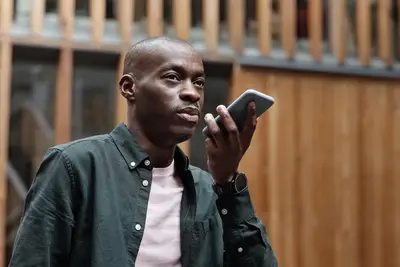
A smartphone sits on a desk, vibrating with a call from a trusted contact, but the voice speaking through the speaker carries a subtle, unnatural cadence.
This scenario illustrates the growing reality of AI voice security risks, where attackers use cloned voices to bypass traditional security measures.
Criminals can now harvest short audio clips from social media to create highly convincing digital replicas. These voice authentication threats target individuals and businesses by impersonating executives or family members to authorize fraudulent transfers.
As these tools become more accessible, the technical difficulty of distinguishing a human from a machine increases.
The emergence of AI speech security issues means that traditional "something you are" biometrics are no longer foolproof. Attackers leverage high-fidelity synthesis to mimic pitch, tone, and even emotional inflection. This evolution forces a reevaluation of how we verify identity through sound.
- An attacker captures a snippet of audio from a social media video.
- The software generates a synthetic clone of the voice.
- The clone is used to place fraudulent calls to family members.
What are the main risks to my voice biometrics?
In the dark bedroom at midnight, my skin crawls as a synthesized voice mimics my brother over the speaker. In the dimly lit office, my heart races when I hear a manager's voice through the headset, sounding far too perfect.
An office worker receives an urgent request for a password change over a voice call that sounds exactly like their manager. This sudden shift in digital identity creates significant voice biometrics risks, as the primary factor of trust—the human voice—is weaponized.
The core of the problem lies in the fact that voice data is often static. Once a voiceprint is stolen or synthesized, it can be used repeatedly across different platforms.
Unlike a password, you cannot easily change your biological voice, making the compromise of biometric data particularly dangerous.

Deepfake voice attacks represent a sophisticated evolution of social engineering. By using generative models, attackers can create real-time conversational agents that respond to prompts dynamically.
This level of interactivity makes it difficult for unsuspecting victims to realize they are speaking to an algorithm.
In this sequence, the second step is the most critical.
How can we address AI voice technology risks?
A security professional sits before multiple monitors, analyzing wave patterns to detect the microscopic inconsistencies of a synthetic voice. Addressing AI voice technology risks requires a multi-layered approach to defense.
- Implement multi-factor authentication that goes beyond voice alone, requiring physical tokens or secondary biometric checks. 2. Develop advanced liveness detection algorithms that can identify the subtle "digital artifacts" present in synthesized speech. 3. Train employees and individuals to recognize the psychological triggers used in voice-based social engineering.
The goal is to move toward a zero-trust architecture where voice is merely one piece of a much larger identity puzzle. I have observed that as software improves, the human element remains the most vulnerable entry point.
Can we actually stop voice phishing for good?
A victim hangs up the phone, feeling a sudden chill of doubt about the person they just spoke to. The process of preventing voice phishing requires both technological innovation and heightened user awareness.
Effective defense starts with skepticism regarding unsolicited high-stakes requests. Organizations must establish out-of-band verification protocols, such as calling a known number back through a secure channel, to confirm identity.
Technological solutions are also being developed to flag suspicious audio in real-time. These tools look for frequency irregularities that the human ear might miss but that indicate a machine-generated signal.
What is the future of voice security?

A laboratory technician adjusts the settings on a high-resolution audio analyzer, looking for the next generation of fraud. The future of voice security will likely involve a constant arms race between generative AI and detection technologies.
As generative models become more seamless, the distinction between human and synthetic audio will blur. Security professionals are looking toward "behavioral biometrics," which analyze not just the sound, but the unique way an individual speaks and reacts.
The complexity of these systems will increase as they attempt to verify identity in real-time across global networks. The battle for secure communication will remain a central pillar of digital privacy.
This part also covers Future voice security tech.
Related
- AI voice anti-scam cases: How to guide voice security
- AI voice in finance: Tips for secure voice strategy
When does the sound of a familiar voice become suspect?
When the sound of a familiar voice is delivered with an unnatural cadence, it signals a potential threat. This subtle deviation from expected speech patterns suggests the use of synthetic impersonation. Attackers exploit the expectation of a familiar sound to gain trust quickly.
- Listen for shifts in pitch or tone that do not match the known voice profile. 2. Be wary if the voice makes an urgent, unexpected request for sensitive information. 3. Recognize that high-fidelity synthesis can mimic emotional inflection, but inconsistencies may remain.
What are the operational risks of voice cloning?
Voice cloning enables criminals to bypass established security protocols with ease. The ability to create convincing digital replicas allows impersonation across various platforms. This capability directly threatens the integrity of both personal and corporate data.
Criminals utilize short audio clips to build these replicas, making the initial data collection phase surprisingly simple. The resulting voice authentication threats target high-value assets by simulating trusted parties.
This increases the technical difficulty for human listeners to discern the authenticity of the sound.



Comments 0