Closing announcements guide for reopening at 8 AM
This article is about announcements. "The right words turn a simple door into a welcoming gateway."
Effective store signage and verbal cues aren't just about relaying facts; they are about managing the physical and emotional flow of a customer's journey.
This guide explores how to craft precise store announcements and door instructions to maintain professional boundaries while keeping the atmosphere inviting.
* Mastering the balance between politeness and clarity in closing time announcements. * Using specific instructional sentences to manage entrance and exit flows. * Understanding the psychology of "soft" vs. "hard" boundaries in retail. * Practical templates for signage and verbal communication.
How can I close doors without losing the relationship?
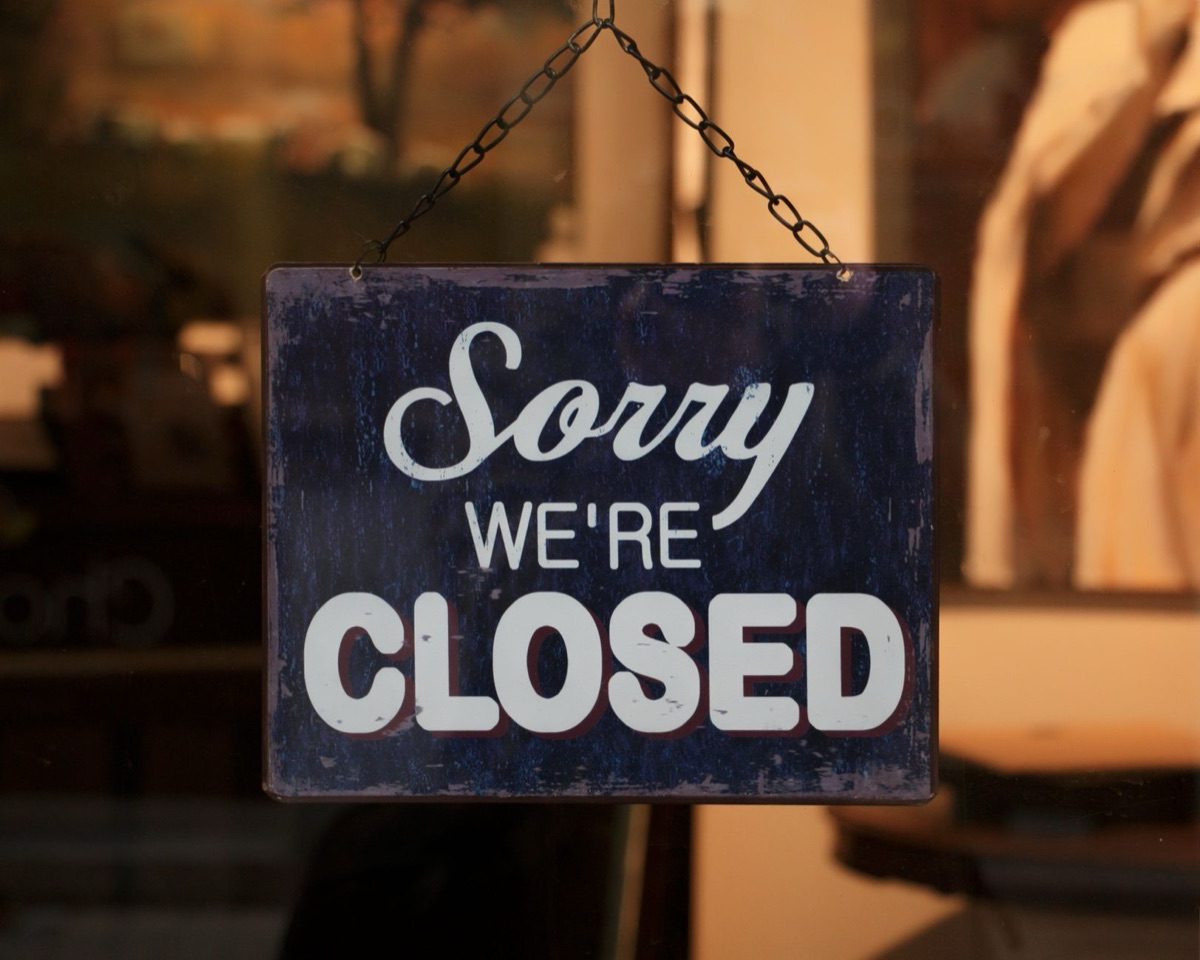
The heavy glass door of a boutique swings shut, and the click of the lock echoes through the empty showroom. A customer stands on the sidewalk, looking at a "Closed" sign, feeling a slight sting of missed opportunity.
Effective closing time announcements must clearly communicate the end of service while leaving the door open for future visits. Instead of a blunt "We are closed," which can feel like a dismissal, a more effective sentence structure focuses on the transition.
For example, "Our doors are now closed for the evening, but we look forward to seeing you tomorrow at 9:00 AM" provides both the fact of closure and the promise of a future encounter.
When writing these sentences, the goal is to manage the customer's expectation. If you simply say "Closed," the interaction ends abruptly. By adding a temporal element—the specific time you reopen—you shift the focus from the current denial of service to the next opportunity.
This is particularly important for high-end retail where the relationship is built on consistent availability.
A well-crafted closing sentence should include: 1. The current status (e.g., "We have concluded our business hours for today"). 2. A polite acknowledgment of the transition. 3. The specific reopening time to prevent ambiguity.
| Approach | Example Sentence | Customer Impact |
|---|---|---|
| Direct | "We are now closed." | Clear but can feel cold or abrupt. |
| Informative | "Our business hours have ended for today; we reopen tomorrow at 8 AM." | Provides clarity and a clear next step. |
| Relationship-focused | "Thank you for visiting us today. We are closing now and look forward to welcoming you back tomorrow morning." | Softens the blow and maintains brand warmth. |
When I experimented with keeping the doors propped open during slow hours, I noticed customers felt more invited to linger rather than just passing by. I realized that a physical barrier often creates a psychological barrier, even when the shop is technically open.

How to handle entrance and exit instructions?
I remember standing in a narrow hallway of a small bakery, trying to figure out if I should push or pull the heavy wooden door while a line of hungry people waited behind me. The confusion was palpable.
Managing the flow of people requires instructional sentences that are both authoritative and effortless to follow. When a store has specific entry or exit requirements—such as a single-door policy or a specific direction of travel—the instructions must be immediate and unmistakable.
For a single-door setup, use "Please use this door for entry and the side door for exit" to prevent congestion.
The key to successful entrance guidance is to avoid "command" language and instead use "directional" language. A command like "Do not enter" feels like a reprimjection.
A directional sentence like "Please wait for assistance before entering" guides the behavior without making the customer feel like a rule-breaker.
To ensure smooth movement, follow these three steps for door instructions: 1. Identify the primary movement (Entry vs. Exit). 2. Use clear verbs (Push, Pull, Enter, Exit). 3. Add a polite modifier (Please, Kindly, We invite you to).
When the space is tight, like in a small urban cafe, the instruction "Please enter through the front and exit through the rear" is much more effective than a sign that simply says "One-way flow." The former tells the customer exactly what to do, while the latter requires them to interpret a concept.
I once placed a heavy sign near the door to direct traffic, but I found it actually caused people to hesitate and look confused. I learned that the most effective instructions are those that feel like a gentle suggestion rather than a command.

Why does the wording of a sign matter so much?
The sun reflects off the polished metal of a storefront sign, and a passerby pauses to read the text. They aren't just reading information; they are reading the personality of the business.
The wording of a sign acts as the "voice" of the brand when no human is present to speak. A sign that says "Closed" is a fact, but a sign that says "We are currently preparing the shop for tomorrow's arrivals" is a story. It explains the *why* behind the closure, which humanizes the business.
In retail, the "softness" of the sentence determines how the customer perceives the brand's authority. A luxury brand might use: "We are currently attending to private appointments. Please visit us again during regular hours." A casual grocery store might use: "We're closed for cleaning.
See you bright and early!" The appropriateness of the tone depends entirely on the target demographic.
If you are struggling to choose between two versions of a sign, consider these factors: * The Tone: Is your brand formal or casual? * The Goal: Are you preventing entry or merely informing? * The Space: Is the sign small (needs brevity) or large (can handle detail)?
One limitation of even the best signage is that it cannot replace human interaction. A sign can state the rules, but it cannot resolve a misunder-standing or a customer's unique needs.
I noticed that changing a sign from 'No Entry' to 'Please Use Side Door' completely changed the mood of the interaction. It was surprising how much a simple shift in tone could prevent customers from feeling scolded the moment they walked in.
How do I manage customer push and pull behavior?
The heavy brass handle of a door feels cold in my hand as I prepare to enter a new shop. I look at the sign to see if there are any special instructions before I reach for the knob.
Instructional sentences for physical actions like pushing or pulling must be placed where the eye naturally lands—usually at eye level or directly above the handle. Using "Please pull to enter" is standard, but in high-traffic areas, adding a reason can help.
For example, "Please pull gently to maintain the seal" provides a functional reason for the instruction.
When dealing with automated doors or specialized entryways, the instructions must be even more precise to avoid injury or confusion. If a door is heavy or difficult to operate, a sentence like "Please assist the door by pulling firmly" manages the physical reality of the interaction.
For effective door management, use this comparison of instructional styles:
- The Informative Style: "Our entrance is located around the corner." (Best for tucked-away shops). 2. The Regulatory Style: "Please use the designated entrance only." (Best for security or health-related flow). 3. The Welcoming Style: "We invite you to enter through the main courtyard." (Best for experiential retail).
A common mistake is to use too many words on a door sign. If a customer has to read a paragraph to figure out how to enter, they will likely hesitate, causing a bottleneck in the sidewalk traffic.
When I tried to push sales through aggressive window displays, I actually saw fewer people stepping inside the shop. I found that creating a sense of curiosity works much better than trying to force a transaction at the threshold.

announcements — Creating a seamless transition from street to shop
I watched a group of tourists stand in front of a museum entrance, staring at a sign that listed five different rules about entry. They looked overwhelmed, and the flow of people behind them began to stall.
The transition from the public sidewalk to the private retail space is a critical moment in the customer journey. The "first sentence" a customer reads is often the most important.
If that sentence is confusing or overly restrictive, the customer may feel a sense of friction before they even step inside.
To create a seamless transition, the instructions should move from the general to the specific. Start with a welcoming concept, then move to the necessary instruction. For example: "Welcome to [Store Name]. To ensure a comfortable experience for everyone, please enter through the front door."
To implement a seamless transition, follow this sequence: 1. The Greeting: Establish a sense of welcome. 2. The Instruction: State the necessary action (entry/exit/direction). 3. The Benefit: Briefly imply why this is being done (comfort, safety, or flow).
This approach prevents the instruction from feeling like an obstacle. Instead, the instruction becomes a way to facilitate a better experience.
I previously had a high threshold at my entrance, which I realized acted as a literal stumbling block for many visitors. Once I leveled the entryway, the flow of people from the sidewalk into the store became much more natural.




Comments 0